Ebook Designing for the Digital Age: How to Create Human-Centered Products and Services
Keep to do nothing will certainly make you feel so burdened. It can be encountered when you really want a brand-new method to life. It is not concerning the book to finish swiftly. It will certainly prefer to exactly how you gain every lesson as well as top quality that is given from this publication. You could make plan to enjoy this book to review in only your spare time. It will certainly despite. So by doing this, select your best way to enhance the Designing For The Digital Age: How To Create Human-Centered Products And Services as your reading product.
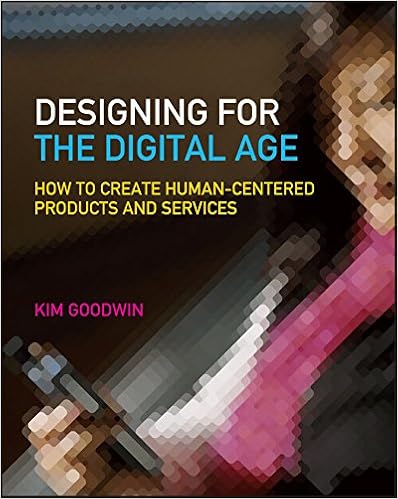
Designing for the Digital Age: How to Create Human-Centered Products and Services

Ebook Designing for the Digital Age: How to Create Human-Centered Products and Services
Do you assume that Designing For The Digital Age: How To Create Human-Centered Products And Services is a good book? Yes, we assume so, looking as well as understanding who the writer of this book; we will undoubtedly know that it is an excellent book to read every time. The writer of this publication is very popular in this subject. When someone needs the reference from the subject, they will seek for the details as well as information from the books composed by this author.
Guides that are presented come from several collections worldwide. It means that you will certainly find the hundreds books from lots of authors and authors from the globe. We understand that such people will require guide from other country. If they need to spend much cash to order as well as wait for often times, you can get different methods below. Below, you could conveniently get the easiest way to attach to the book as Designing For The Digital Age: How To Create Human-Centered Products And Services directly.
By getting the Designing For The Digital Age: How To Create Human-Centered Products And Services in soft documents, as spoken formerly, numerous advantages can be acquired. Besides, as what you understand, this book supplies intriguing declaration that makes people curious to review it. When you choose to read this book, you can start to recognize that book will constantly provide good things. This book is very simple and also gives big outcomes.
Checking out the title of this publication means that reading something to involve after getting the soft file. Designing For The Digital Age: How To Create Human-Centered Products And Services has the easy title, yet it's really easy and clear to always remember. Discovering the book in this soft file system will certainly lead you to know how actually it comes. It might be your best friend in investing the spare time.
Designing successful products and services in the digital age requires a multi-disciplinary team with expertise in interaction design, visual design, industrial design, and other disciplines. It also takes the ability to come up with the big ideas that make a desirable product or service, as well as the skill and perseverance to execute on the thousand small ideas that get your design into the hands of users. It requires expertise in project management, user research, and consensus-building. This comprehensive, full-color volume addresses all of these and more with detailed how-to information, real-life examples, and exercises. Topics include assembling a design team, planning and conducting user research, analyzing your data and turning it into personas, using scenarios to drive requirements definition and design, collaborating in design meetings, evaluating and iterating your design, and documenting finished design in a way that works for engineers and stakeholders alike.
Product details
Paperback: 768 pages
Publisher: Wiley; 1 edition (March 3, 2009)
Language: English
ISBN-10: 9780470229101
ISBN-13: 978-0470229101
ASIN: 0470229101
Product Dimensions:
7.4 x 1.7 x 9.2 inches
Shipping Weight: 3.8 pounds (View shipping rates and policies)
Average Customer Review:
4.4 out of 5 stars
28 customer reviews
Amazon Best Sellers Rank:
#175,550 in Books (See Top 100 in Books)
This book was recommend purchase for DesignLab and it's a plethora of information. The author has a solid understanding and grasp of today's market. I recommended this book to my mentor as well. If you're studying UI or UX Design or want to know about the business of digital design I highly recommend it. Caveat, the book is huge I don't recommend you carry it around however if possible. Hopefully it will be available in ebook format.
Alan Cooper created Goal-Directed Design methodology, which he introduced in his influential 1998 book The Inmates Are Running the Asylum: Why High-Tech Products Drive Us Crazy and How to Restore the Sanity. He also founded Cooper, a leading interaction design consultancy. In his foreword to Designing for the Digital Age: How to Create Human-Centered Products and Services, he says this about the author:"Kim Goodwin has been a prime participant in the dialog at Cooper since 1997. She has been one of the major contributors to the development of our design methodology. She is an authority on design, problem scoping, engagement management, and design documentation. Kim has labored in the trenches in a broad variety of design segments, from clinical medicine to conceptual blockbusting. She has led groups of designers, coordinating their work, and synchronizing it with the needs of some very demanding clients."And she has taught others to design. Many hundreds of people have gotten a taste of Kim's clarity, patience, thoroughness, and rigor by attending her presentations and at conferences, her one-day field seminars, or her design courses. In fact, Kim has been the primary creator of training content for our very successful Cooper U classes. Over the years, her particular expertise at observation, synthesis, and communication while in charge of other design teams and honed in the classroom, led her to write this book. Much of the content and wisdom gleaned from those classes is evident here."It is quickly apparent that the book was produced from tried and true application, not just concepts and theory. It is filled with comprehensive examples of real product designs, that not only clearly illustrate the processes, but also gives them enormous credibility. At the same time, the foundation of the book is a deeply held conviction about design and best way to do it."Design is the craft of visualizing concrete solutions that serve human needs and goals within certain constraints. Design is a craft because it is neither science nor art, but somewhere in between. In order for design to be design and not art, it must serve human needs and goals. Finally, design always happens within certain constraints.""Goal-Directed Design encompasses the design of a product's behavior, visual form, and physical form. Its fundamental premise is that the best way to design a successful product is to focus on achieving goals.""The Goal-Directed method is a set of tools and best practices developed entirely through practice in the real world. The method consists of four components: principles, patterns, process, and practices."After briefly discussing principles (guidelines for creating good solutions under specific circumstances) and patterns (types of solutions that tend to be useful for certain classes of problems), the book devotes almost 700 pages to a detailed description of process and practices. The process and practices are grouped into seven stages of a design project:1. Getting Started2. Research3. Modeling4. Requirements5. Framework6. Detailed Design7. Ensuring SuccessOne of my initial concerns was that the process and practices described require a large team of diverse specialists, which few companies can afford, working over a relatively long total timeline. While the book states that the methodology can be scaled for smaller teams and a shorter timeline, I had my doubts. However, I recently had an opportunity to develop a project plan directly with Cooper for the design of role-based user interfaces for genomics research laboratory software, and I saw, firsthand, that the process can be effectively scaled to address limited resources and tight timelines.Alan Cooper also writes, "This book is comprehensive in its scope, exhaustive in its depth, authoritative in its practice, and priceless in its wisdom. It will certainly become the anchor document for an entire practice. While I expect to see it on the bookshelves of every practicing designer, I further expect that it will spend the lion's share of its time off the shelf and at the elbow of hard-working designers."I've read about 60% of the book over 24 months in a non-linear manner, and it is very possible that I will never read the complete book. However, it has taken its place with a select group of books that I refer to constantly for real-world problem solving. This is not a book to read, but rather a book to use, and I strongly recommend it for anyone involved in any function of interaction design.
From assembling a design team and planning design projects to filed study and interviews, from persona development to detailed design and usability testing — the book covers it all. In well structured manner the author step by step explains all whats and whys behind each step in design process.If you want to systematize whatever you learned from your own practice — this book is for you. If you're looking for ways to expand your influence as a product designer in your organization — this book is for you. If you're at the forefront of bringing a design centered culture into your company — this book is definitely for you.Example interview with author's annotations and example of persona's story are really insightful. Thank you, Kim.
I read this book for school and appreciated how concise yet wholesome each chapter was. It's heavy material, but the content is critical for the UX practitioner. The chapters about different deliverables are really fleshed out which can make some of the reading tedious, but the book really does hit all corners.
Designing for the Digital Age: How to Create Human-Centered Products and Services serves as an excellent guide and reference for new and experienced human centered design practitioners. Kim Goodwin (VP of Cooper) does a great job translating her goal-oriented design processes into clear and understandable terms. Human/user centered design books can easily be littered with heavy jargon or unintelligible references that make it difficult or impossible to understand or practice. Goodwin makes a conscious effort to explain and visualize many of the concepts introduced in each chapter and keeps the research lingo within reason. For example, in Chapter 12: Defining Requirements, Goodwin dispels what requirements aren't (i.e. features or specifications) and promptly outlines what is needed to generate effective requirements (i.e. data needs, functional needs, product / service qualities, constraints). In addition, Goodwin's writing style guarantees a cognitive learning experience with most readers by providing multiple exercises and scenarios that engage and evoke a desire for comprehension. The photography, diagrams, and charting are plentiful and supplement the subject matter effectively also.I believe that this book is easily a pylon supporting the ever-swelling weight of UCD with its hoard of overlapping design disciplines. I recommend it to anyone interested in design or the design process...Table of Contents:Getting Started Chapter 1: Goal-Directed Product and Service Design Chapter 2: Assembling the Team Chapter 3: Project PlanningResearch Chapter 4: Research Fundamentals Chapter 5: Understanding the Business Chapter 6: Planning User Research Chapter 7: Understanding Potential Users and Customers Chapter 8: Example Interview Chapter 9: Other Sources of Information and InspirationModeling Chapter 10: Making Sense of Your Data: Modeling Chapter 11: PersonasRequirements Chapter 12: Defining Requirements Chapter 13: Putting It All Together: The User and Domain AnalysisFramework Chapter 14: Framework Definition: Visualizing Solutions Chapter 15: Principles and Patterns for Framework Design Chapter 16: Designing the Form Factor and Interaction Framework Chapter 17: Principles and Patterns in Design Language Chapter 18: Developing the Design Language Chapter 19: Communicating the Framework and Design LanguageDetailed Design Chapter 20: Detailed Design: Making Your Ideas Real Chapter 21: Detailed Design Principles and Patterns Chapter 22: Detailed Design Process and Practices Chapter 23: Evaluating Your Design Chapter 24: Communicating Detailed DesignEnsuring Success Chapter 25: Supporting Implementation and Launch Chapter 26: Improving Design Capabilities in Individuals and Organizations
Designing for the Digital Age: How to Create Human-Centered Products and Services PDF
Designing for the Digital Age: How to Create Human-Centered Products and Services EPub
Designing for the Digital Age: How to Create Human-Centered Products and Services Doc
Designing for the Digital Age: How to Create Human-Centered Products and Services iBooks
Designing for the Digital Age: How to Create Human-Centered Products and Services rtf
Designing for the Digital Age: How to Create Human-Centered Products and Services Mobipocket
Designing for the Digital Age: How to Create Human-Centered Products and Services Kindle